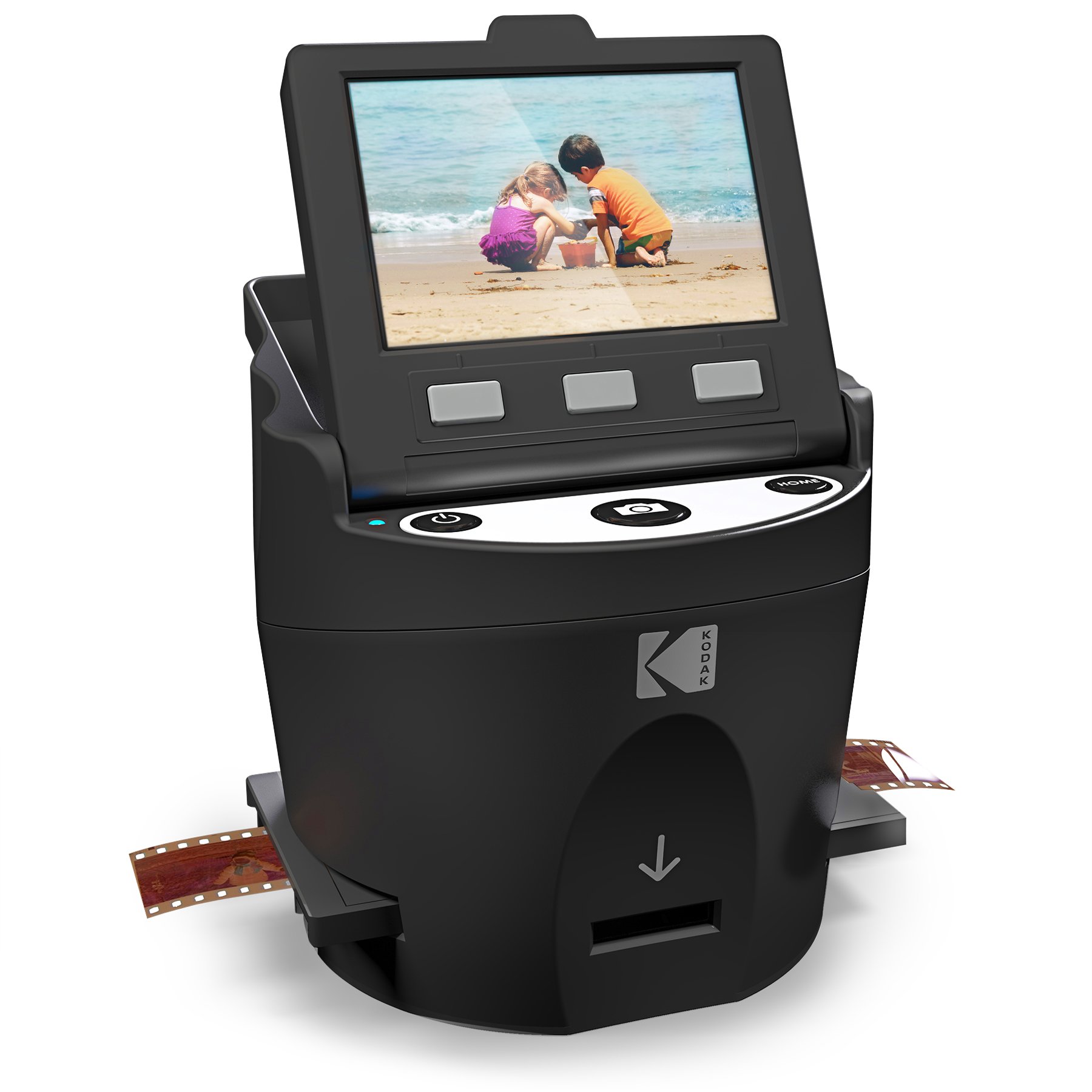
The Kodak SCANZA Film & Slide Scanner is designed to turn several older film formats into JPEG files, with a built-in display for previewing images as you work.
This kodak scanza film scanner review looks at its broad format support, straightforward controls, and the practical limits buyers should consider before starting an archive project.
Kodak SCANZA Scanner Review Summary
The quick verdict
11,000+ ratings
Read Amazon ReviewsKodak SCANZA Film & Slide Scanner
A handy choice for families digitizing supported home-movie and photo formats who want direct SD-card saving and an onboard preview screen.
- Converts supported 35mm, 126, and 110 negatives and slides, as well as Super 8 and 8mm film, into JPEG digital files.
- Offers 14MP or 22MP output options, as described for the scanner.
- Has a 3.5-inch built-in color TFT LCD with adjustable brightness and a tilt feature for image viewing.
- Includes multiple film inserts and adapters, plus large one-touch buttons for scanning and saving.

Pros
- Handles a broader mix of formats than a scanner limited to common still-photo negatives and slides, including Super 8 and 8mm.
- The built-in tilting screen supports previewing without relying solely on a computer display.
Consider before buying
- The required SD card is a separate purchase, so buyers need to add compatible storage before scanning.
- Compatibility is limited to the named 35mm, 126, 110, Super 8, and 8mm formats; check film labels and dimensions for unusual or unlabeled material.
Read the full review summary
SCANZA supports 35mm, 126, and 110 negatives, plus Super 8 and 8mm film, giving it a useful range for households with mixed generations of photos and home movies.
It includes multiple film inserts and adapters, one-touch scan and save controls, and an adjustable 3.5-inch color display that tilts for viewing.
The scanner saves JPEG files to an SD card, which is sold separately and can be up to 128GB.
Its included cables and adapters make the setup more self-contained, while the format limit matters: buyers should match their film to the supported list before choosing it for a larger collection.
The buying factors
Kodak SCANZA Scanner Scorecard
Editorial scores reflect listed features and buyer fit; they are not laboratory measurements or customer ratings.
Film format coverage
Supports five named formats across negatives, slides, and movie film, including Super 8 and 8mm.
On-device preview
The adjustable-brightness 3.5-inch color screen tilts for easier viewing during operation.
Handling and controls
Multiple inserts and adapters pair with large one-touch buttons for scan-and-save operation.
Output flexibility
The interface allows image RGB and resolution edits, with JPEG output saved to a separate SD card.
Included accessories
The package includes a range of cables, an AC adapter, film adapters, and a cleaning brush.
Collection fit
Its wide format range suits mixed collections, though the stated film compatibility is specific and should be checked.
Key Features and Specifications of Kodak SCANZA Scanner
- Converts supported 35mm, 126, and 110 negatives and slides, as well as Super 8 and 8mm film, into JPEG digital files.
- Offers 14MP or 22MP output options, as described for the scanner.
- Has a 3.5-inch built-in color TFT LCD with adjustable brightness and a tilt feature for image viewing.
- Includes multiple film inserts and adapters, plus large one-touch buttons for scanning and saving.
- Provides an interface for editing image RGB and resolution and browsing a gallery.
- Saves to an SD card, which is not included; supported capacity is up to 128GB.
- Includes a USB power cable, HDMI cable, AC adapter, video cable, and film cleaning brush. The brush can also be used to clean the light box.
Pros and Cons of Kodak SCANZA Scanner
Pros
- Handles a broader mix of formats than a scanner limited to common still-photo negatives and slides, including Super 8 and 8mm.
- The built-in tilting screen supports previewing without relying solely on a computer display.
- Multiple inserts and adapters are included to accommodate the listed film formats.
- One-touch scan and save controls and a gallery interface offer an approachable workflow.
- Includes several connection and power accessories, along with a brush for cleaning film and the light box.
Consider before buying
- The required SD card is a separate purchase, so buyers need to add compatible storage before scanning.
- Compatibility is limited to the named 35mm, 126, 110, Super 8, and 8mm formats; check film labels and dimensions for unusual or unlabeled material.
- A 3.5-inch screen gives a compact preview, so buyers who need a larger viewing area may prefer a different design.
Who Should Buy Kodak SCANZA Scanner?
Good fit
Consider the Kodak SCANZA if you have a mixed family collection that includes supported still-photo film and Super 8 or 8mm reels.
Its included adapters and on-device display make it a practical starting point for reviewing and converting varied material.
It is also a reasonable fit if you prefer a self-contained scan-and-save workflow with simple controls. Plan for a separate SD card, and verify your formats before committing to a large batch.
Who should skip it
Choose another approach if your collection relies on film formats outside the listed compatibility range, or if you need a large screen for detailed image review.
Confirm the exact film format before buying, especially when reels or negatives are unlabeled.
It may not suit buyers who want to begin immediately without sourcing storage, since an SD card is required for saving and is not included.
How the Kodak SCANZA Scanner fits a home film archive
A useful range for mixed collections
SCANZA’s support for still-photo formats alongside Super 8 and 8mm is its clearest point of distinction.
That combination can reduce the need to sort a family archive into separate groups before choosing a digitizing workflow, provided each item matches one of the supported formats.
Preview and adjustment at the device
The 3.5-inch tilting LCD gives users a local place to view images, and its brightness can be adjusted.
The interface also offers RGB and resolution editing, which is useful for basic adjustments during the conversion process; the supplied details do not establish how those controls affect every kind of film.
Storage and cleaning are part of the setup
Saving uses a separate SD card with support for capacities up to 128GB, so buyers should budget for compatible storage and choose capacity based on their archive.
The included brush can clean both film and the light box, a practical step when dust or speckles could otherwise appear in scans.
Check the film before buying
The supported list is specific, and the scanner is not described as handling film beyond those formats.
If you have a mixed or poorly labeled collection, identify the film type first and check that it fits the included inserts; doing so helps avoid finding an unsupported format after setup.
Alternatives to Kodak SCANZA Scanner
Slide & Negative Scanners alternative
12,000+ ratings
Read Amazon ReviewsKodak Slide N Scan Film & Slide Scanner
Choose SCANZA if movie-film support is important or you need its stated larger SD-card capacity.
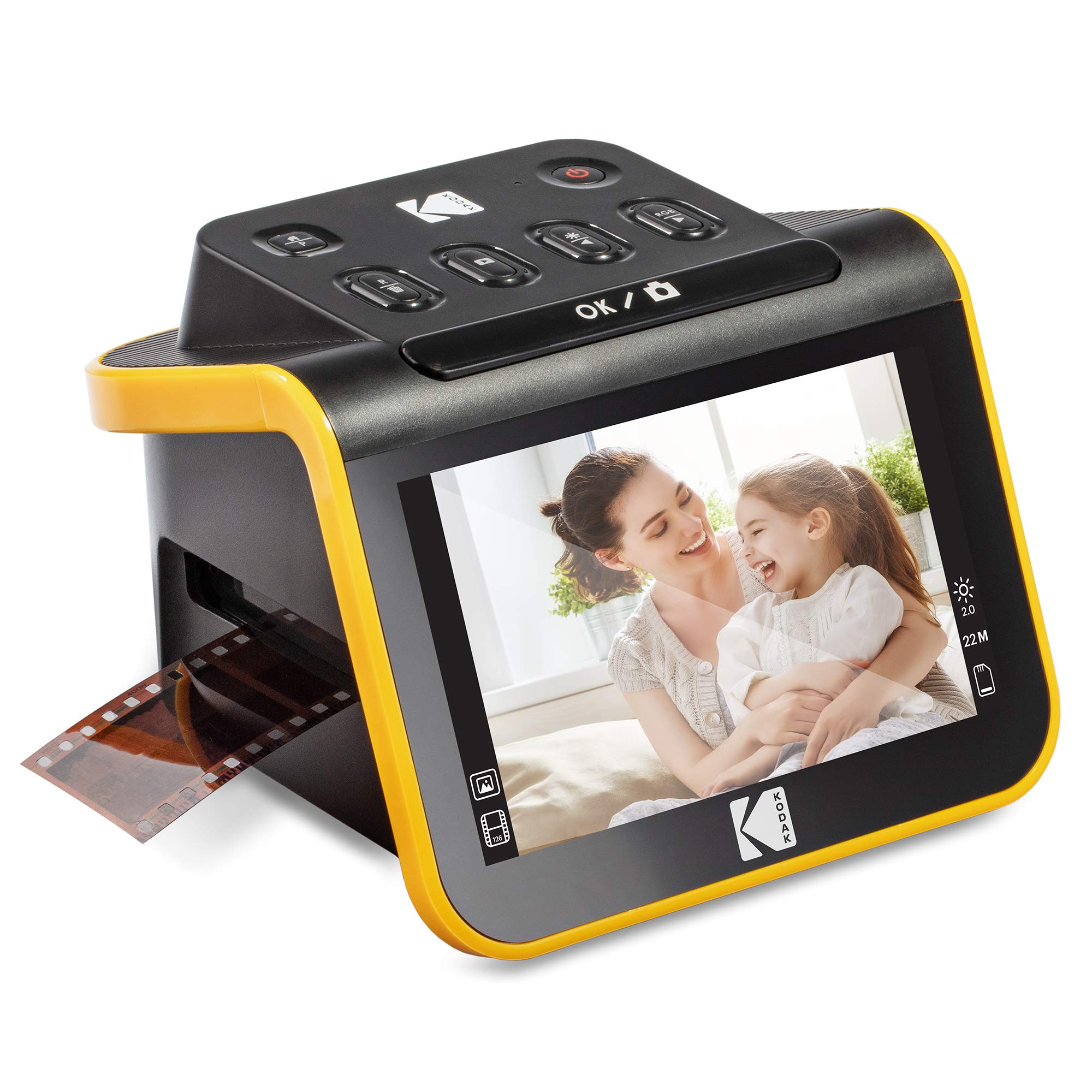
The Slide N Scan is a better fit if your archive is limited to its listed still-photo formats and you value a larger preview screen.
- The Slide N Scan supports 135, 110, and 126 negatives and slides, has a 5-inch LCD, and saves to SD or SDHC cards up to 32GB.
- Its described formats do not include Super 8 or 8mm.
- The SCANZA covers 35mm, 126, and 110 film as well as Super 8 and 8mm, with a 3.5-inch tilting display and SD-card support up to 128GB.
Slide & Negative Scanners alternative
1,000+ ratings
Read Amazon ReviewsKodak Slide N Scan Max Film Scanner
SCANZA is the more suitable choice when you need the listed movie-film formats or higher-capacity card support.
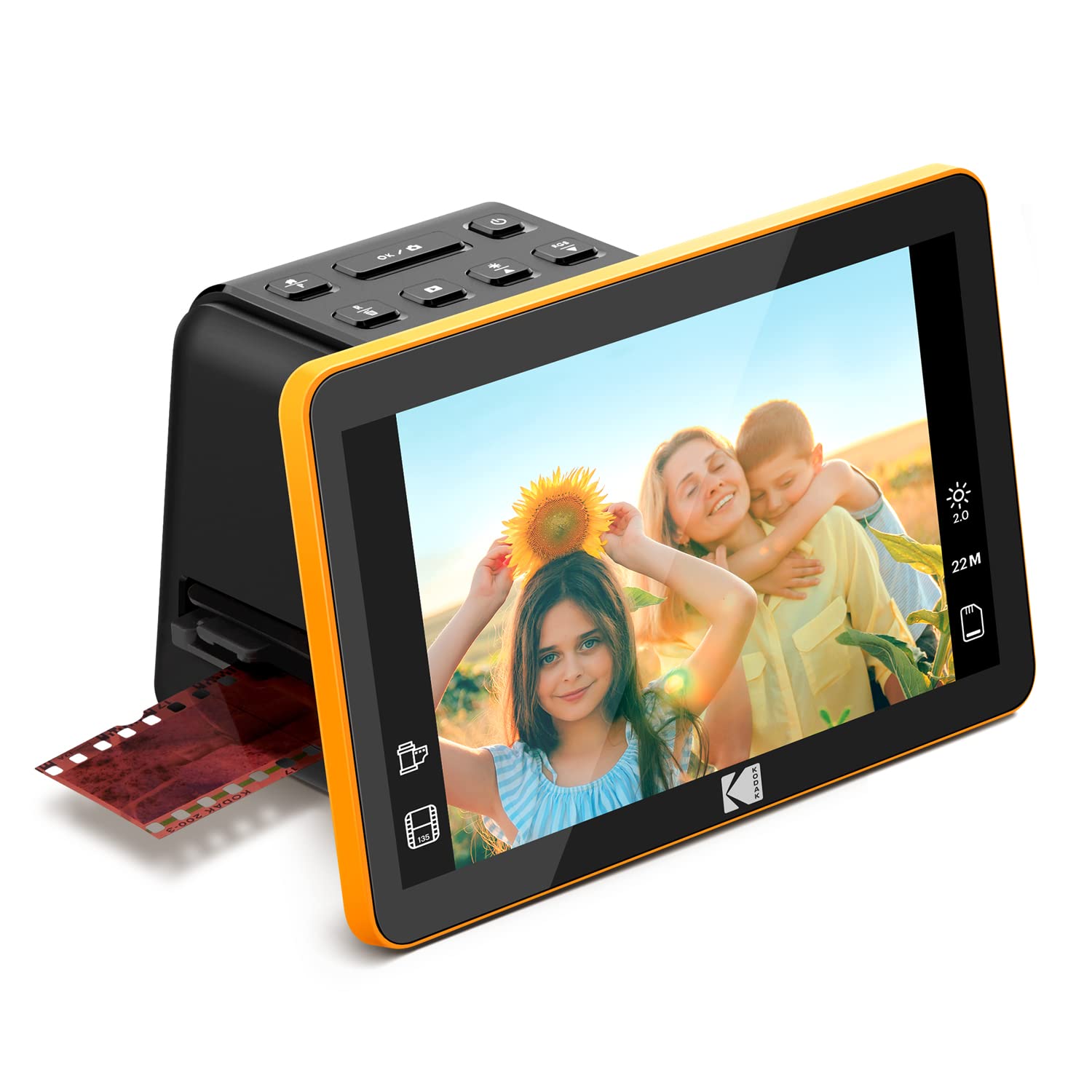
Consider the Slide N Scan Max for a still-photo collection if its feeding tray and specified sensor details better match your priorities.
- The Slide N Scan Max supports 135, 110, and 126 negatives and slides, saves to SD or SDHC cards up to 32GB, and describes a moving tray for feeding film.
- It lists a 13MP CMOS sensor with 22MP interpolation.
- The SCANZA includes Super 8 and 8mm alongside 35mm, 126, and 110 formats, and its stated SD-card support reaches up to 128GB.
Is Kodak SCANZA Scanner Worth It?
The Kodak SCANZA Film & Slide Scanner is worth considering for households digitizing a mixed archive of supported still-photo film and Super 8 or 8mm.
Its multiple inserts, one-touch controls, adjustable tilting display, and included cables make it a flexible home conversion option.
Before buying, confirm every format you need is on its supported list and account for the separate SD card. If movie-film support is unnecessary and a larger preview screen matters more, compare the still-photo-focused alternatives before deciding.
Your review at a glance
11,000+ ratings
Read Amazon ReviewsKodak SCANZA Film & Slide Scanner
A handy choice for families digitizing supported home-movie and photo formats who want direct SD-card saving and an onboard preview screen.
- Converts supported 35mm, 126, and 110 negatives and slides, as well as Super 8 and 8mm film, into JPEG digital files.
- Offers 14MP or 22MP output options, as described for the scanner.
- Has a 3.5-inch built-in color TFT LCD with adjustable brightness and a tilt feature for image viewing.
- Includes multiple film inserts and adapters, plus large one-touch buttons for scanning and saving.